

The 1st FOWLS Symposium: Setting the Paths for Just Transitions (4 September 2026, Global)
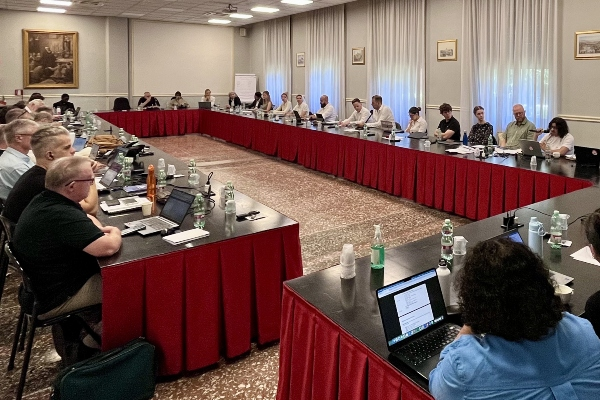
Participants of the First Symposium on Climate and Environmental Change and the World of Work. Photo: Ignacio Alonso Alasino/ICMC
This document presents the outcomes of the 1st FOWLS Symposium on Climate and Environmental Change and the World of Work, highlighting the main reflections, priorities, and commitments identified by participants to advance just transitions, social and ecological justice, and decent work.
The 1st FOWLS Symposium: Setting the Paths for Just Transitions
This final document captures the shared reflections, analyses, and commitments that emerged from the 1st FOWLS Symposium on Climate and Environmental Change and the World of Work. Drawing on the White Paper, plenary discussions, and communal social discernment, participants reaffirmed the urgent need to link climate, social, and economic justice through transformative action that places human dignity, care for creation, and the common good at its centre. The document highlights key priorities for future engagement, including just transitions, the role of women and youth as agents of change, stronger multi-stakeholder collaboration, and the responsibility of faith communities, workers’ organizations, businesses, and civil society to work together in addressing the interconnected challenges facing workers, communities, and the planet.
The document concludes that responding to the climate and environmental crisis requires more than a simple transition in technologies or energy systems. Participants call for a deeper transformation that addresses structural inequalities, concentrations of power and wealth, and the exclusion of workers and communities from decision-making processes. It highlights the central role of women and youth as agents of change, the importance of local action and cross-sector collaboration, and the responsibility of faith communities, labour organizations, businesses, and public institutions to work together in promoting social and ecological justice. By presenting concrete experiences, lessons learned, and pathways for engagement, the document serves both as a call to action and as a roadmap for future collaboration within and beyond the FOWLS network.